Furniture Living Room Retro Style: A Designer's Toolkit for Timeless Appeal
Capturing the warmth and distinct character of mid-century interiors often requires more than just a good photograph. It demands a collection of elements that can be manipulated, scaled, and arranged to fit a specific narrative. The Furniture Living Room Retro Style isometric collection offers exactly that—a versatile suite of digital assets designed for creators who need flexibility without sacrificing aesthetic integrity. This bundle moves beyond static imagery, providing a modular approach to interior visualization that speaks directly to the needs of modern digital and print projects.
The Anatomy of a Retro Isometric Aesthetic
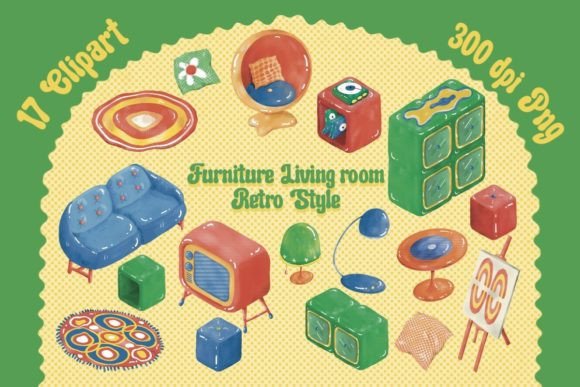
Understanding the visual language of this collection is key to using it effectively. The style leans heavily into the clean lines and organic curves characteristic of mid-century modern design, but rendered in an isometric perspective. This 2.5D viewpoint gives each piece—be it the sofa, coffee table, or lamp—a tangible sense of depth and dimension without the complexity of full 3D modeling. The color palette typically features muted earth tones, mustard yellows, teals, and warm woods, which are hallmarks of retro interior design.
The personality of the Furniture Living Room Retro Style is one of curated nostalgia. It feels familiar yet fresh, avoiding the kitsch that can sometimes accompany retro themes. The illustrations balance detail with simplicity, ensuring that each element remains recognizable and impactful even at smaller scales. This makes the collection exceptionally useful for projects where clarity and mood are paramount. The transparent backgrounds of the PNG files allow these elements to be layered seamlessly onto any surface, from a website hero image to a complex scrapbook layout.
Practical Applications Across Creative Disciplines
The true value of this asset bundle lies in its adaptability. For designers and brand strategists, these isometric furniture pieces are more than just clipart; they are foundational elements for building a cohesive visual identity. Imagine a boutique furniture store's branding system. The sofa and cabinet can be used to create custom icons for their website navigation. The lamp and stool can form the basis of a pattern for packaging design. The entire collection can be assembled into a scene for a hero image on a landing page, instantly communicating the brand's aesthetic focus on retro-inspired living.
For content creators and marketers, the applications are equally robust. A blogger writing about home decor can use the pillow and painting elements to create unique section dividers or featured images for their posts. The high-resolution 3000x3000 pixel files ensure that these graphics will look sharp on everything from social media graphics to printed flyers. The consistency of the style across the 17 pieces guarantees that a campaign will maintain visual harmony, whether the assets are used on Instagram stories, email newsletters, or physical posters. This consistency is a cornerstone of professional brand identity.
From Digital Screens to Physical Prints
Consider a small business owner launching a line of greeting cards. They could use the coffee table and lamp to create a minimalist front design, pairing it with a serif font for a classic feel. Alternatively, they could combine multiple elements to build a detailed scene for a notebook cover. The collection's strength is its modularity. You are not locked into a pre-made scene. You can create a new design by putting furniture into a room in your own style, allowing for endless creative combinations that align with your specific project's tone and message.
In the realm of web design and digital publishing, these assets solve a common problem: the need for unique, on-brand imagery that isn't a generic stock photo. A website for a vintage-inspired cafe could use the stool chair as a custom cursor or integrate the carpet pattern into a footer design. The retro aesthetic pairs well with a variety of font pairings. For headlines, a bold display font with a slight vintage flair can create impact, while a clean sans serif font for body copy ensures readability. This interplay between illustration and typography is where the collection truly shines, allowing for the creation of a sophisticated and engaging user experience.
Integrating the Collection into Your Design Workflow
When incorporating the Furniture Living Room Retro Style assets into your projects, think beyond simple placement. Use them to establish a visual hierarchy. A large, detailed sofa can anchor a poster design, while smaller elements like the pillow can be used as subtle accents in a card layout. The isometric perspective naturally creates a sense of order and structure, which can be leveraged to guide the viewer's eye through a composition.
Evaluating project fit is straightforward. If your brand or project aims to evoke warmth, craftsmanship, and a touch of nostalgia, this style aligns perfectly. It's less suited for ultra-modern, stark, or highly corporate aesthetics, but excels in contexts related to lifestyle, home, boutique retail, and creative arts. Before finalizing a design, test how the elements interact with your chosen typefaces. A script font might complement the organic shapes of the furniture for a wedding invitation, while a geometric sans serif could provide a clean contrast for a tech startup's blog header that uses retro themes ironically.
Finally, the commercial licensing of this bundle provides the freedom to use these assets across client work and personal projects alike. This makes it a practical investment for freelancers and agencies looking to expand their library of design assets. The high-quality 300 dpi resolution ensures that whether you're working on a digital ad or a printed brochure, the output will be professional and crisp. By treating this collection as a modular toolkit rather than a static image set, you unlock its full potential to elevate your creative projects with a distinctive and timeless retro flair.