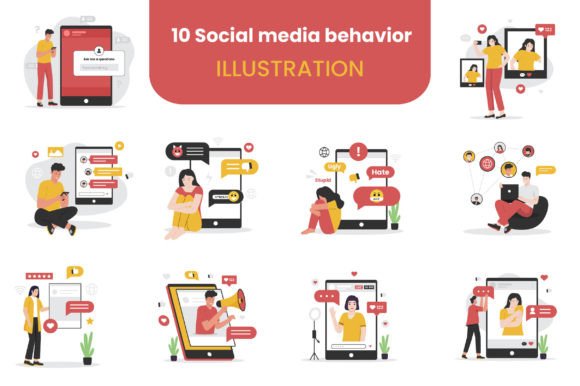
Visual Storytelling with the Social Media Behavior Illustration Set
In the fast-paced world of digital marketing, static text often fails to capture the nuances of human interaction. We are seeing a significant shift away from generic stock photography toward more stylized, conceptual art that communicates complex ideas quickly. This is where a dedicated Social Media Behavior Illustration Set becomes an indispensable asset. It is not merely a collection of pretty pictures; it is a visual language designed to decode the habits, rituals, and digital culture of our audience. For designers and brand strategists, this set offers a cohesive way to depict the invisible threads connecting users to their devices and, ultimately, to the brands they love.
Anatomy of the Aesthetic: Flat Vector Style
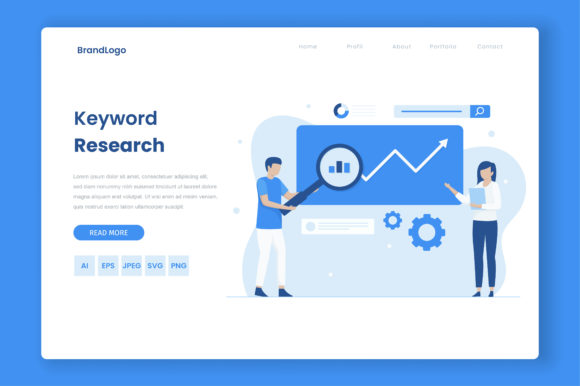
The visual personality of the Social Media Behavior Illustration Set is rooted in the trendy flat vector style that has dominated the digital landscape for the past few years. Unlike realistic photography, which can sometimes feel heavy or dated, flat vector illustrations offer a clean, modern, and minimalist aesthetic. They strip away unnecessary details—like complex textures or dramatic shadows—to focus on the core action and emotion. This style relies on bold, vibrant color palettes and simplified geometric shapes to create a friendly and approachable atmosphere.
One of the key strengths of this illustration style is its versatility in color application. Because the vectors are clean and distinct, they can be easily adapted to match any existing brand identity. Whether you are working with a serious corporate palette or a playful startup vibe, the Social Media Behavior Illustration Set can be tinted and adjusted to fit seamlessly into your visual ecosystem. The characters are often depicted in relatable poses—scrolling feeds, liking posts, sharing content, or analyzing data—making them immediately recognizable to a modern audience.
Strategic Applications for Branding and Marketing
For entrepreneurs and small business owners, the utility of this set extends far beyond simple decoration. It serves as a strategic tool for brand identity and visual hierarchy. When used on a landing page, for instance, these illustrations can guide the user's eye toward a call-to-action or explain a complex feature without requiring a wall of text. The consistency of the illustration set ensures that your website, mobile app, and social media graphics speak the same visual language, fostering brand recognition and trust.
Consider the user experience on a mobile app. Integrating these illustrations into empty states, onboarding screens, or success messages adds a layer of polish and professionalism that generic icons cannot match. It humanizes the digital interface, making the technology feel less cold and more engaging. Similarly, for content creators and bloggers, these assets are perfect for breaking up long-form articles, creating featured images, or designing compelling Pinterest graphics that stand out in a crowded feed.
Practical File Usage: From Digital to Print
A major advantage of a professional Social Media Behavior Illustration Set is the comprehensive file inclusion. You are not limited to just one format. The package typically includes AI, EPS, JPEG, PNG, and SVG files. This variety is crucial for maintaining quality across different mediums.
For web designers, the SVG (Scalable Vector Graphics) files are a game-changer. They load faster than heavy image files and scale perfectly on high-resolution retina screens without pixelation. For print projects—such as posters, banners, or brochures—the EPS and AI files allow you to scale the artwork to massive sizes while maintaining crisp, clean lines. The PNG files, often provided with transparent backgrounds, are perfect for layering over existing photography or complex backgrounds in your design software.
Enhancing Audience Engagement
The psychology behind using a Social Media Behavior Illustration Set is simple: people respond to visuals that reflect their own reality. When a visitor lands on your page and sees an illustration of someone engaging with a device in a way that mirrors their own behavior, they form an instant connection. This is particularly effective for tech startups, SaaS companies, and digital agencies that need to explain abstract concepts like "cloud syncing" or "networking."
Rather than trying to explain these behaviors with stock photos of people awkwardly pointing at blank screens, these illustrations use metaphor and style to convey the message. The "trendy" aspect of the design also signals to your audience that your brand is current, innovative, and aware of contemporary design standards. It subtly boosts the perceived value of your product or service.
Implementation Tips for Maximum Impact
To get the most out of this asset, avoid the temptation to use every illustration at once. Overloading a page with too many graphics can be just as detrimental as having no graphics at all. Instead, use the Social Media Behavior Illustration Set to highlight key points.
- Hero Sections: Use a larger, more detailed composition from the set to anchor your homepage hero section.
- Feature Lists: Break down your product features using smaller, specific icons or scenes from the set to create visual anchors.
- Error Pages: Turn a frustrating "404 Page Not Found" into a moment of delight with a relevant illustration.
- Blog Headers: Create custom headers for your articles to increase click-through rates on social shares.
Conclusion
The Social Media Behavior Illustration Set is more than just a collection of design assets; it is a versatile toolkit for modern visual communication. By leveraging the clean lines of flat vector illustration and the comprehensive file formats provided, you can elevate your web design, strengthen your brand identity, and create a more engaging experience for your audience. Whether you are a designer crafting a new logo, a marketer building a landing page, or a publisher enhancing editorial design, this set provides the professional polish needed to stand out in the digital age.